

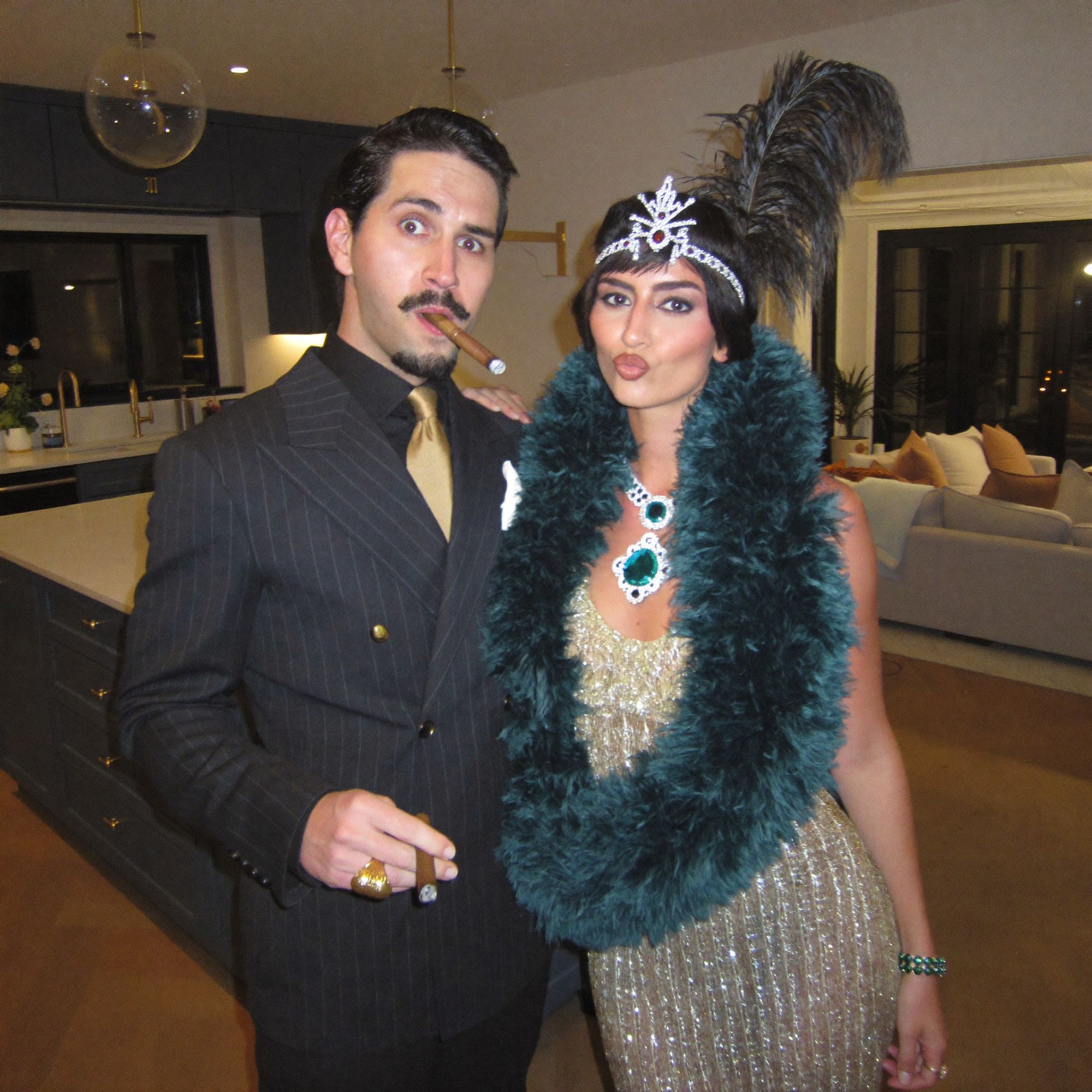
The best murder mystery dinner parties have a shape. Not a script the host reads from a ring-binder while everyone else eats — a shape: about two hours, mapped to the courses of a real dinner, with the investigation rising as the plates change. Get the shape right and the night runs itself. Here's how we build ours, and how to host any kit well.
Before the night: one page of prep
A good kit should ask almost nothing of you in advance. Ours ask for this much: print the PDFs on A4 (plain paper is fine — card stock makes the clue cards feel like props, but it's a luxury, not a requirement), sort the character booklets into envelopes, and read the host guide, which is genuinely one page of prep plus a run sheet for the night.
Send the invitations with the character assignments a week or two out. Each of ours carries a costume note, but costumes are optional — a waistcoat and an attitude will do. The one thing worth insisting on: everyone reads their booklet before they arrive, not at the table.
The golden rule: you are not the narrator
The single thing that separates a great night from a stilted one is whether the host gets to play. In a lot of kits, the host sits outside the story — reading stage directions, adjudicating, checking the answer sheet. That's a job, not a party.
We build ours so there's no dedicated host role to sit out as. You play a character too. The Show — the cinematic companion that comes with every kit — does the narrating, keeps time with act timers, and handles the clue cards: depending on the game it either puts each one on screen at the moment it's earned, or tells you exactly when to deal it. If you'd rather not set up a screen, the printed host guide runs the whole night on its own: the Inspector's speeches are printed word for word, with suggested timings for each act and the reveal speech at the end. Whichever way you host, the mystery solves identically.
Map the acts to the courses
The structure that works, course by course:
- Drinks. Guests arrive in character. Titles roll, the intro film plays, the body is found. Nobody has left the building.
- Act I, the starter. Everyone introduces themselves and establishes where they were. The Inspector arrives with the first evidence.
- Act II, the main. The investigation. Trade, probe, lie. The Inspector returns with the last piece.
- Act III, dessert. The accusations. Then the vote, and the reveal.
Serving between acts matters more than it sounds: the kitchen breaks are when guests conspire in twos and threes, and that's where half the game happens.
Handling the table
Uneven numbers: a kit should adapt rather than break. Ours play at six, seven or eight — you tell The Show how many are coming, the murderer is always one of the six core characters, and two extra insert cards cover the evidence the missing guests would have brought. No reshuffling, no "just pretend this character isn't here".
The quiet guest: the fix belongs in the writing, not in your hosting. Every booklet in our kits gives its character something to actively do in every act, so nobody can sit silent even if they'd like to. If you're hosting another kit, check for this before the night and hand the shyest guest the busiest character.
The rules lawyer: agree upfront that the evidence is the evidence. In a well-built mystery every clue either implicates or exonerates, so the table never needs a ruling from you — it needs to compare notes.
The reveal
Take the vote before anything is revealed — everyone commits to an accusation, out loud, and the room realises how differently they've each read the same evening. Then, and only then, the answer. If the kit has a reveal film, dim the lights for it. If it doesn't, the host guide's reveal speech is the one moment you're allowed to perform.
Pour something, dim the lights, and find out which of your friends can lie to your face.